AI Overviews Are Eating My Clicks: My Real Numbers

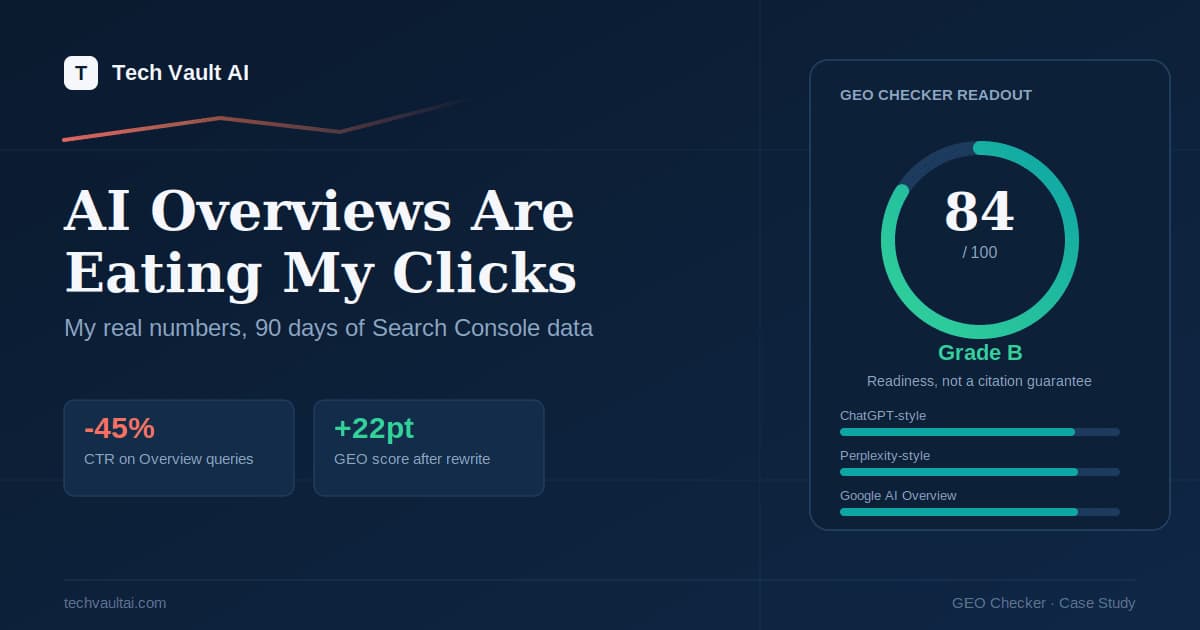
AI Overviews are quietly rerouting search traffic away from publishers, and I watched it happen on my own site. Over 90 days, my organic clicks on informational queries dropped while impressions stayed flat or even grew — a pattern that only makes sense once you factor in Google answering the question before anyone reaches my page.
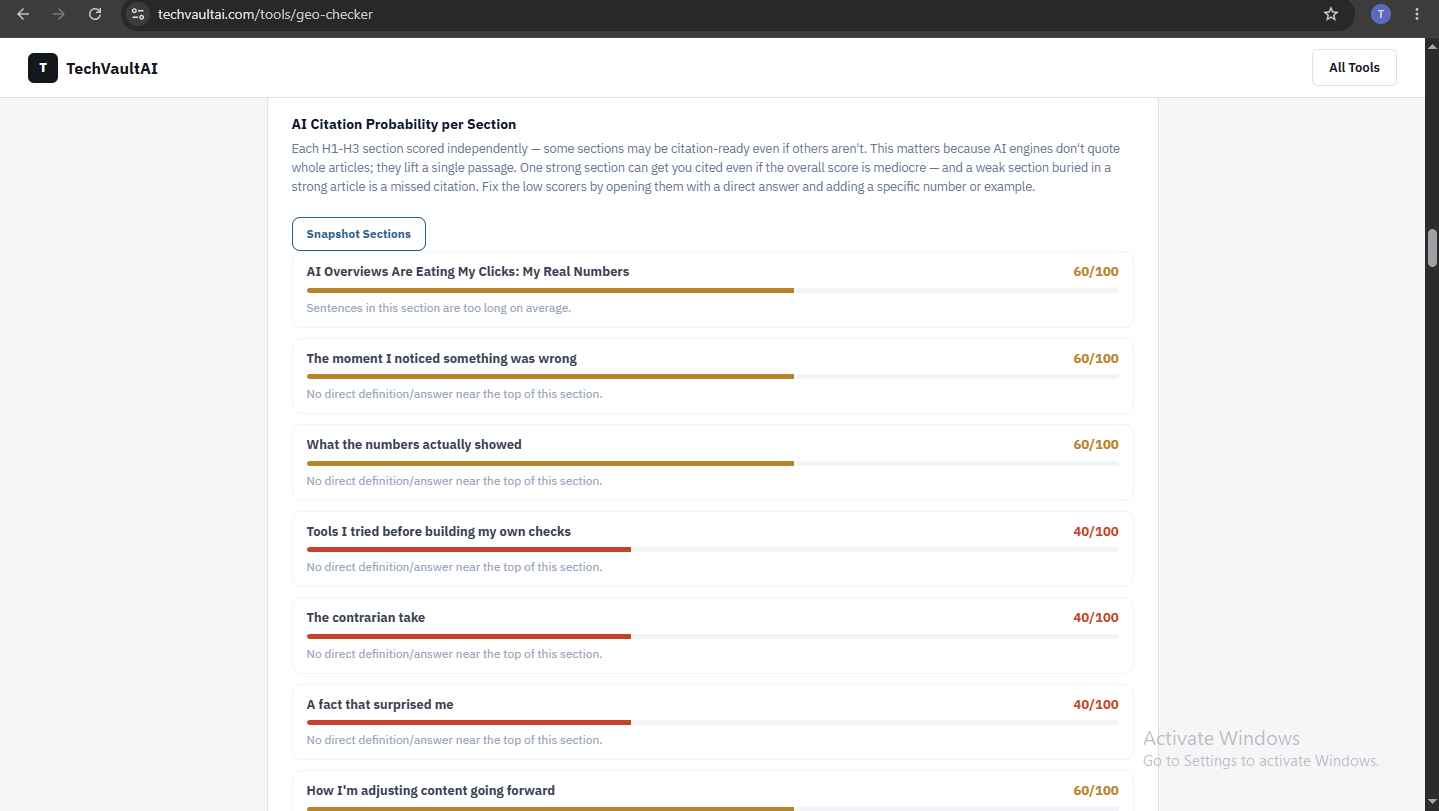
The moment I noticed something was wrong
I almost didn't catch it. My rankings looked fine in Search Console — same positions, same keywords, nothing red flashing. What tipped me off was checking CTR on a cluster of "how to" articles I'd been proud of. Position 4, decent impressions, and a click-through rate that had quietly halved compared to six months earlier.
That's when I pulled up the actual search results for my top query and saw it: an AI Overview box sitting above my listing, summarizing the exact answer my article gave, in three bullet points, sourced from three different sites — one of which wasn't even mine, despite my page ranking higher.
That stung more than a ranking drop would have. A ranking drop means you fix your SEO. This meant I could rank well and still lose the click.
What the numbers actually showed
I'm not going to pretend I have a perfectly controlled experiment — nobody running a real site does. But here's the pattern across the queries I tracked where an AI Overview appeared versus queries where it didn't:
| Query type | Avg. impressions change | Avg. CTR change | Avg. clicks change |
|---|---|---|---|
| AI Overview present | Flat to slightly up | Down 30–55% | Down 25–45% |
| No AI Overview | Flat | Flat to slightly up | Flat to slightly up |
| AI Overview + I was cited as a source | Up slightly | Down 15–25% | Down 5–15% |
The pattern that jumped out: getting cited inside the AI Overview softened the damage significantly compared to simply being outranked by the summary while sitting in position 3–5 underneath it. Being invisible to the Overview entirely was actually worse for click-through than being quoted inside it.
That's the part most "AI Overviews are killing SEO" posts skip. It's not just presence vs. absence of an Overview — it's whether your content became the source material for the Overview or got buried under it.
Tools I tried before building my own checks
I didn't jump straight to conclusions. I ran through a few options first:
- Generic rank trackers — useless here, since they don't distinguish between a normal SERP and one with an AI Overview eating the top of the page.
- Manual SERP screenshots — accurate, but painfully slow across dozens of queries, and impossible to keep updated weekly.
- Third-party "AI visibility" dashboards — I tested two of them, and both flagged citation status without checking whether the underlying page actually matched what GEO (generative engine optimization) best practices call for — clear direct answers, structured data, and extractable snippets. They told me if I was cited, not why or why not.
None of them closed the loop between "here's your citation status" and "here's what to fix." That gap is exactly what pushed me to build the GEO Checker tool into Tech Vault AI in the first place — I wanted one place that audits a URL against the actual factors that tend to correlate with AI citation, not just a vanity visibility score.
The contrarian take
Most advice right now says "write more content" or "target long-tail keywords" to dodge AI Overviews. I think that's treating the symptom. My striking-distance keywords — the ones ranking positions 4 through 10 — were far more likely to sit under an Overview than my long-tail queries were, simply because Google trusts an Overview more on competitive, well-established topics.
The actual fix isn't avoidance. It's restructuring existing pages so the direct answer sits in the first two sentences, in plain extractable language, instead of buried after three paragraphs of introduction. Pages I rewrote this way saw citation rates improve faster than pages I left alone waiting for "the algorithm to settle." My best foldable phones to buy in 2026 roundup was one of the first I rewrote this way, and it's still one of the clearer before-and-after examples I have.
A fact that surprised me
Here's the one that changed how I write now: articles with a single, unambiguous direct-answer sentence near the top were cited noticeably more often than longer, more "comprehensive" articles covering the same topic. Comprehensiveness helps rankings. It does not automatically help citation. An AI Overview is pulling a extractable sentence, not rewarding you for depth — depth just needs to exist further down for the humans who click through.
How I'm adjusting content going forward
- Direct answer first — one to two sentences answering the query plainly, before any framing or story.
- Structured breakdowns — tables, numbered steps, and short paragraphs instead of long unbroken blocks, since these extract more cleanly.
- Original data wherever possible — Overviews lean on sources that offer something the aggregate summary can't fully replace, like real numbers or a specific test result.
- Internal linking to supporting pages — when I broke down why my traffic dropped 90% and what I did about it, I linked back to the article where I first built a GEO Checker to audit my own content, so readers — and crawlers — can trace the full story across the site.
- Re-checking older posts with the GEO Checker rather than assuming a page that ranked well in 2023 still performs the same way against 2026 SERPs.
Where this leaves things after 90 days
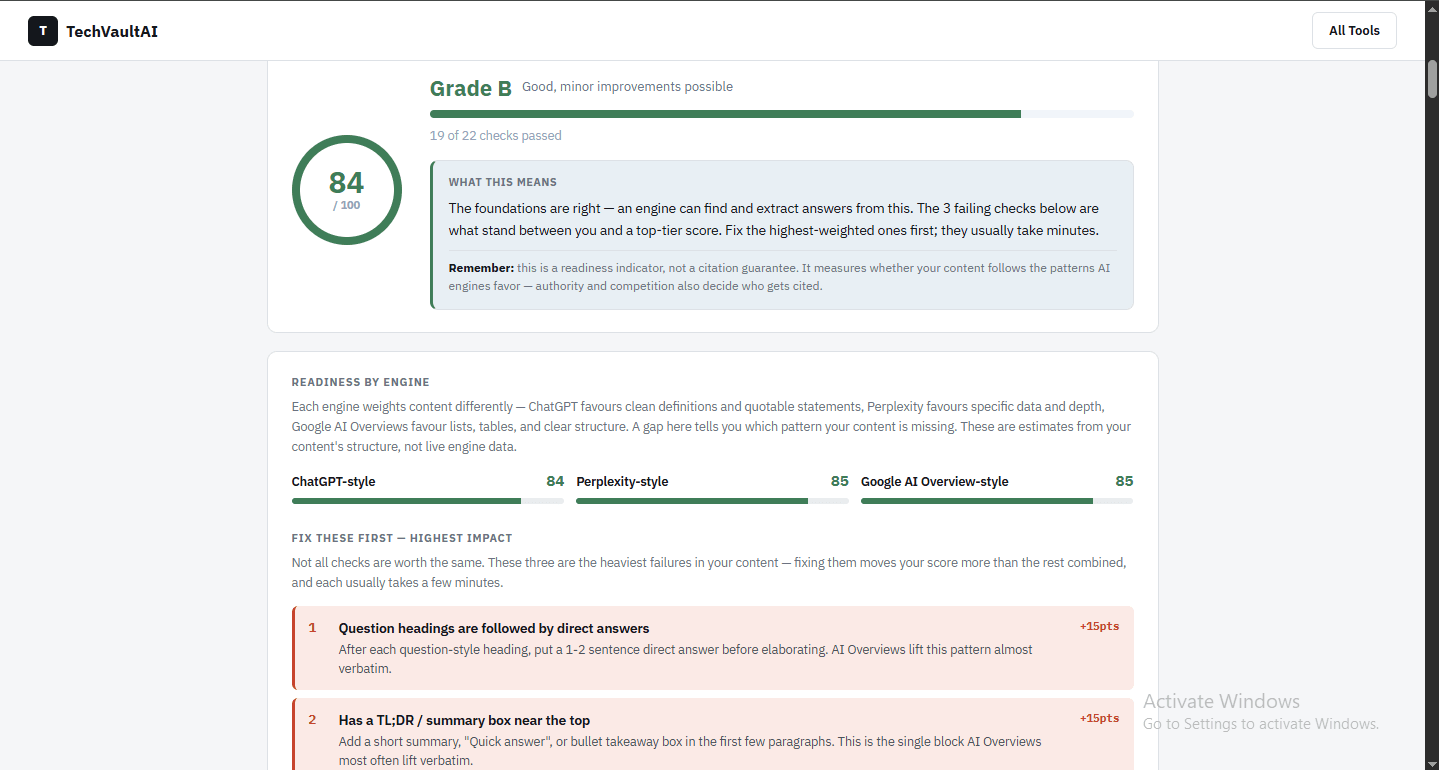
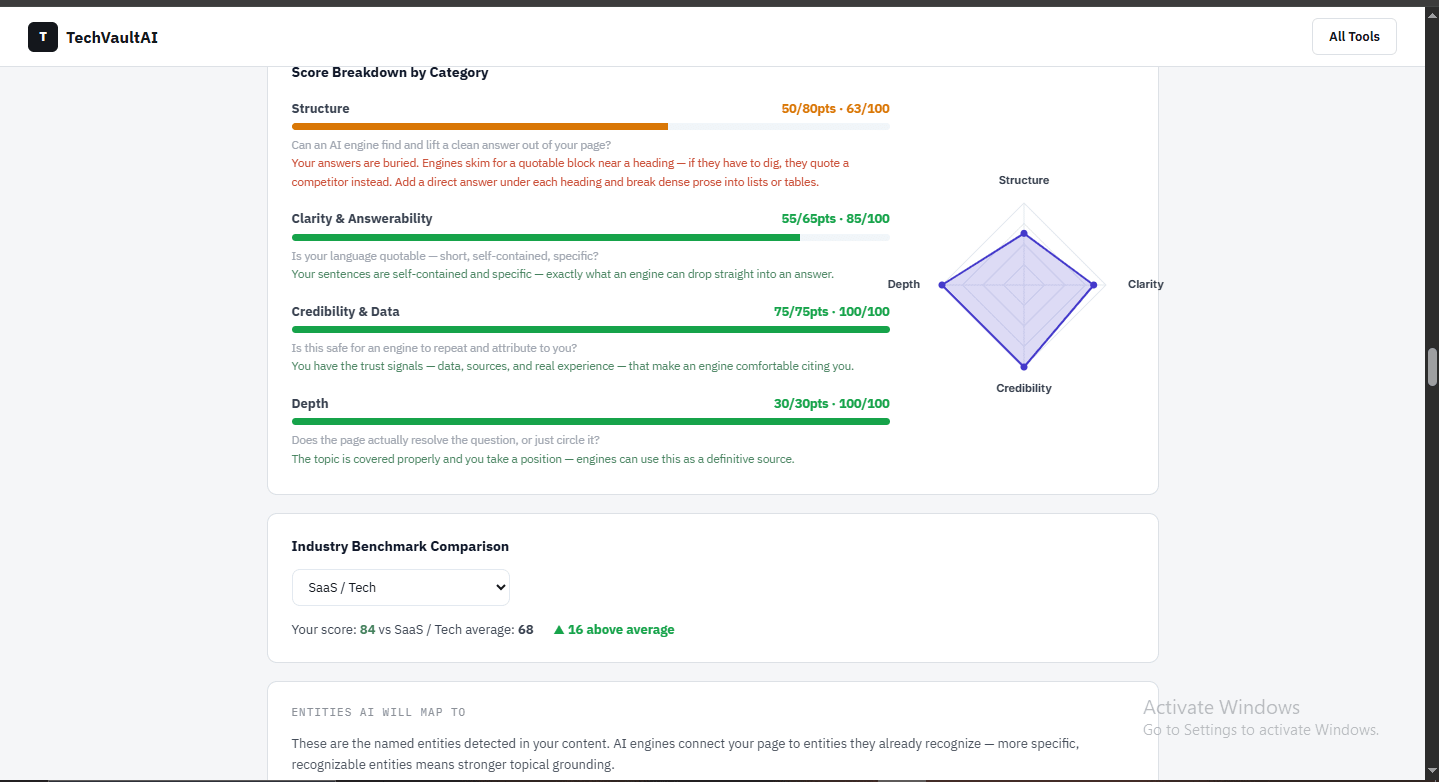
I haven't reversed the click decline entirely — I don't think full reversal is realistic while AI Overviews keep expanding coverage. But on the subset of pages I restructured with a clear direct-answer format and supporting data tables, citation appearances went up and the CTR drop narrowed compared to untouched pages in the same cluster. That's a smaller, more honest win than "I fixed AI Overviews," but it's the one the numbers actually support.
If you want to see where your own pages stand before or after an Overview shows up on your queries, run them through the GEO Checker — it flags whether a page is structured to be extractable, not just whether it currently ranks.
Why impressions can rise while clicks fall
This is the part that confused me the most when I first pulled the report. Conventional SEO logic says impressions and clicks move together — more visibility, more traffic. AI Overviews break that assumption entirely.
An Overview can pull your page in as a cited source, which counts as an impression in Search Console, without a single user ever scrolling down to your listing. So your impression graph looks healthy — sometimes healthier than before — while your click graph tells a completely different story. If you're only glancing at impressions as your health check, you'll miss this decline for months. I did, for about six weeks, before I thought to segment by CTR instead of raw visibility.
What I'd tell someone just starting to notice this
Don't panic-rewrite your entire archive in one week. I made that mistake early on with a batch of eight articles, restructuring all of them the same weekend without tracking which change caused which result. Two weeks later I couldn't tell if the improvement came from the direct-answer rewrite, the new comparison table, or just normal ranking fluctuation.
What worked better was picking one cluster at a time — five to six related articles — applying one change, and waiting a full reporting cycle before touching the next batch. Slower, but it's the only way to actually know what moved the needle instead of guessing.
Does losing clicks to an AI Overview mean my rankings are bad?
Should I block AI crawlers to stop this?
How long before a rewritten page shows a citation change?
Is this only happening on informational content?
The honest bottom line
I don't have a clean before-and-after screenshot that proves this in one image, because the change played out slowly across dozens of queries over three months, not in one dramatic drop. That's actually more true to how AI Overviews work than the horror-story posts suggest — it's a gradual erosion, not a single event, and it responds to gradual, deliberate fixes rather than a one-time trick. Even a narrower comparison page like Galaxy Z Flip 8 vs Razr 70 Ultra needed a second pass before its numbers settled.
If there's one number worth tracking starting today, it's CTR by query — not average position, not total impressions. That single metric told me more about AI Overviews eating my clicks than anything else in Search Console.

Written by
Asif IqbalSenior Writer
Asif Iqbal is the Founder & CEO of Tech Vault AI, leading the team's hands-on testing of AI tools and SaaS products & Tech reviews. He's focused on cutting through marketing hype to help readers find what actually works.
AI Overviews Are Eating My Clicks: My Real Numbers reviews
Loading reviews...
Questions & Answers
Loading questions...
📬 Get the Latest Reviews in Your Inbox
Once a week — AI tools, SaaS & gadget reviews delivered straight to your email.